Introduction
Retail grocery competition has intensified dramatically over the past few years, driven by digital transformation, inflationary pressures, and omnichannel expansion. Supermarkets now rely on accurate, real-time pricing intelligence to stay competitive across regions and product categories. Businesses looking to Scrape Stop & Shop Grocery Prices for Competitive Intelligence gain access to actionable insights such as promotional patterns, SKU-level price fluctuations, category-level demand shifts, and regional discount strategies.
From 2020 to 2026, grocery eCommerce adoption has surged globally, with digital grocery sales expected to contribute over 20% of total grocery revenue in developed markets by 2026. This growth has increased the need for structured datasets that capture dynamic price changes across thousands of SKUs. Retail analytics teams use this data to benchmark competitors, optimize price elasticity models, and refine assortment strategies.
This blog explores structured data extraction frameworks, monitoring methodologies, and scalable automation strategies that transform raw grocery listings into actionable retail intelligence.
Evolving Digital Pricing Landscape
Retailers require accurate Stop & Shop Online Grocery Price Tracking systems supported by advanced Top Grocery Price Monitoring APIs to stay aligned with real-time market shifts. Between 2020 and 2023, grocery price volatility increased by nearly 18% due to supply chain disruptions and inflation trends. Monitoring price changes daily allows retailers to adjust pricing strategies dynamically rather than reactively.
For example, price fluctuation data from 2020–2026 reveals consistent promotional spikes during seasonal cycles and holidays. Structured API-driven monitoring ensures automated updates across thousands of product listings without manual intervention.
| Year | Avg Grocery Price Increase (%) | Digital Grocery Growth (%) |
|---|---|---|
| 2020 | 4.5% | 12% |
| 2021 | 6.2% | 15% |
| 2022 | 8.8% | 18% |
| 2023 | 7.4% | 19% |
| 2024* | 5.1% | 20% |
| 2025* | 4.8% | 21% |
| 2026* | 4.5% | 23% |
Accurate tracking mechanisms help retailers identify pricing gaps, competitor discount cycles, and margin compression risks. Advanced monitoring APIs automate category crawling, price normalization, and historical logging, creating structured datasets that feed directly into retail BI dashboards for predictive analysis and strategic pricing adjustments.
SKU-Level Intelligence for Strategic Benchmarking
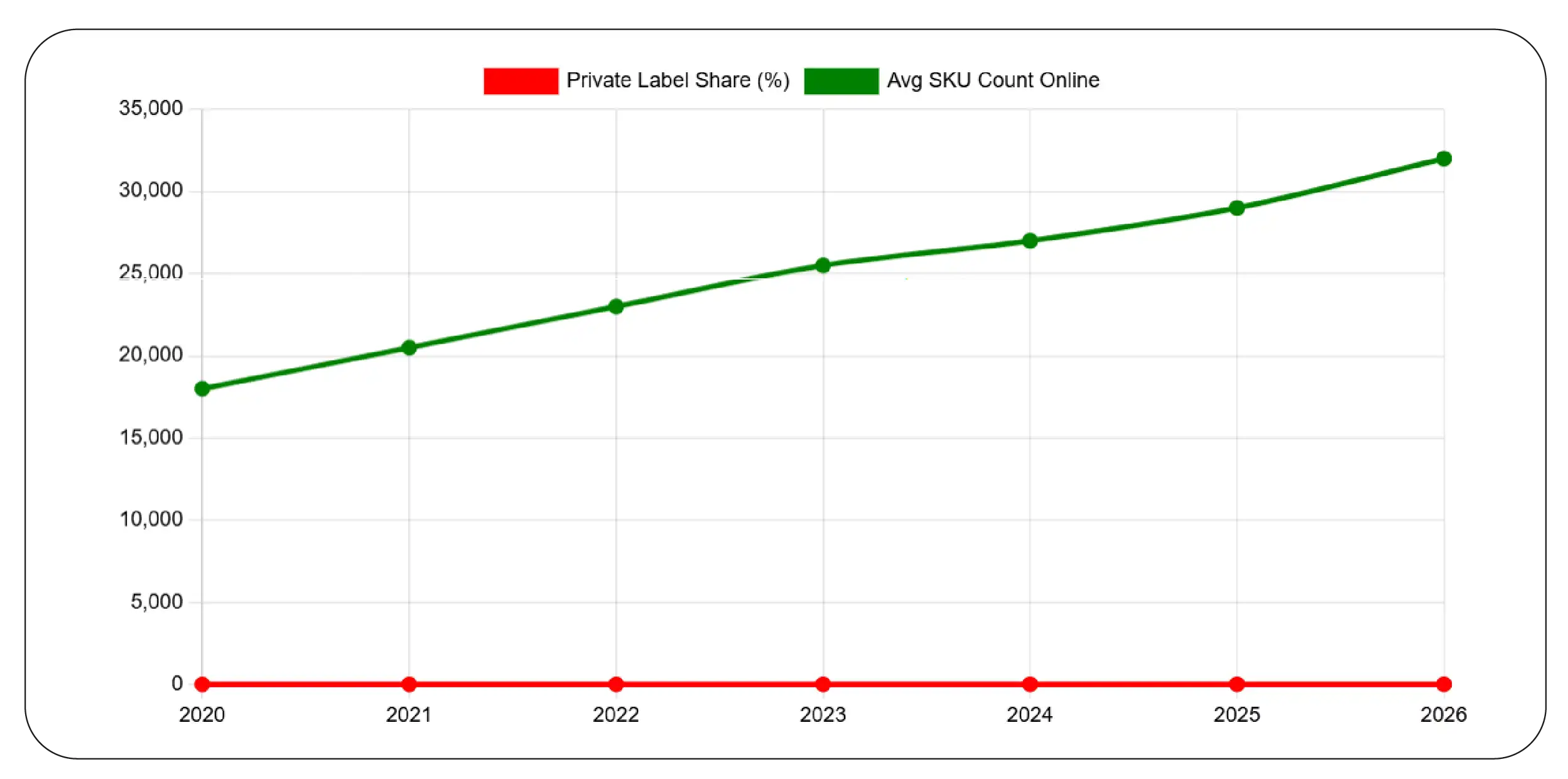
Retail decision-makers increasingly rely on Stop & Shop SKU-Level Grocery Price Intelligence supported by a structured Grocery store dataset to drive granular competitive insights. SKU-level monitoring enables analysis of price differences across brands, package sizes, and regional locations.
From 2020 to 2026, private-label grocery sales grew by nearly 25%, intensifying the need for product-level intelligence. Retailers analyzing SKU-level data can compare branded vs. private-label pricing gaps and adjust promotional depth accordingly.
| Year | Private Label Share (%) | Avg SKU Count Online |
|---|---|---|
| 2020 | 17% | 18,000 |
| 2021 | 18% | 20,500 |
| 2022 | 20% | 23,000 |
| 2023 | 22% | 25,500 |
| 2024* | 23% | 27,000 |
| 2025* | 24% | 29,000 |
| 2026* | 25% | 32,000 |
Structured datasets provide attributes such as weight, packaging type, category hierarchy, and promotional tags. This depth of intelligence supports price elasticity modeling, demand forecasting, and cross-category competitive analysis. By leveraging detailed SKU-level monitoring, grocery retailers enhance assortment planning and identify revenue opportunities hidden within micro-category segments.
Competitive Data Extraction for Margin Optimization
Structured Stop & Shop Competitive Grocery Pricing Data Extraction combined with professional Pricing Intelligence Services enables retailers to protect margins while remaining competitive. Between 2020 and 2023, grocery profit margins narrowed by approximately 2–3% due to rising operational costs.
Retailers using automated pricing intelligence tools analyze competitor discount frequency, bundle offers, and flash promotions. This structured extraction framework captures product-level price points, deal durations, and stock status.
| Year | Avg Margin (%) | Promotion Frequency Increase (%) |
|---|---|---|
| 2020 | 5.2% | 8% |
| 2021 | 4.8% | 10% |
| 2022 | 4.3% | 13% |
| 2023 | 4.5% | 15% |
| 2024* | 4.9% | 16% |
| 2025* | 5.1% | 17% |
| 2026* | 5.3% | 18% |
By extracting structured pricing data, retailers gain clarity on competitor markdown timing and depth. This supports optimized promotional planning and improved negotiation strategies with suppliers. Data-backed intelligence ultimately reduces reactive discounting and enhances long-term profitability.
Digital Shelf Visibility and Market Positioning
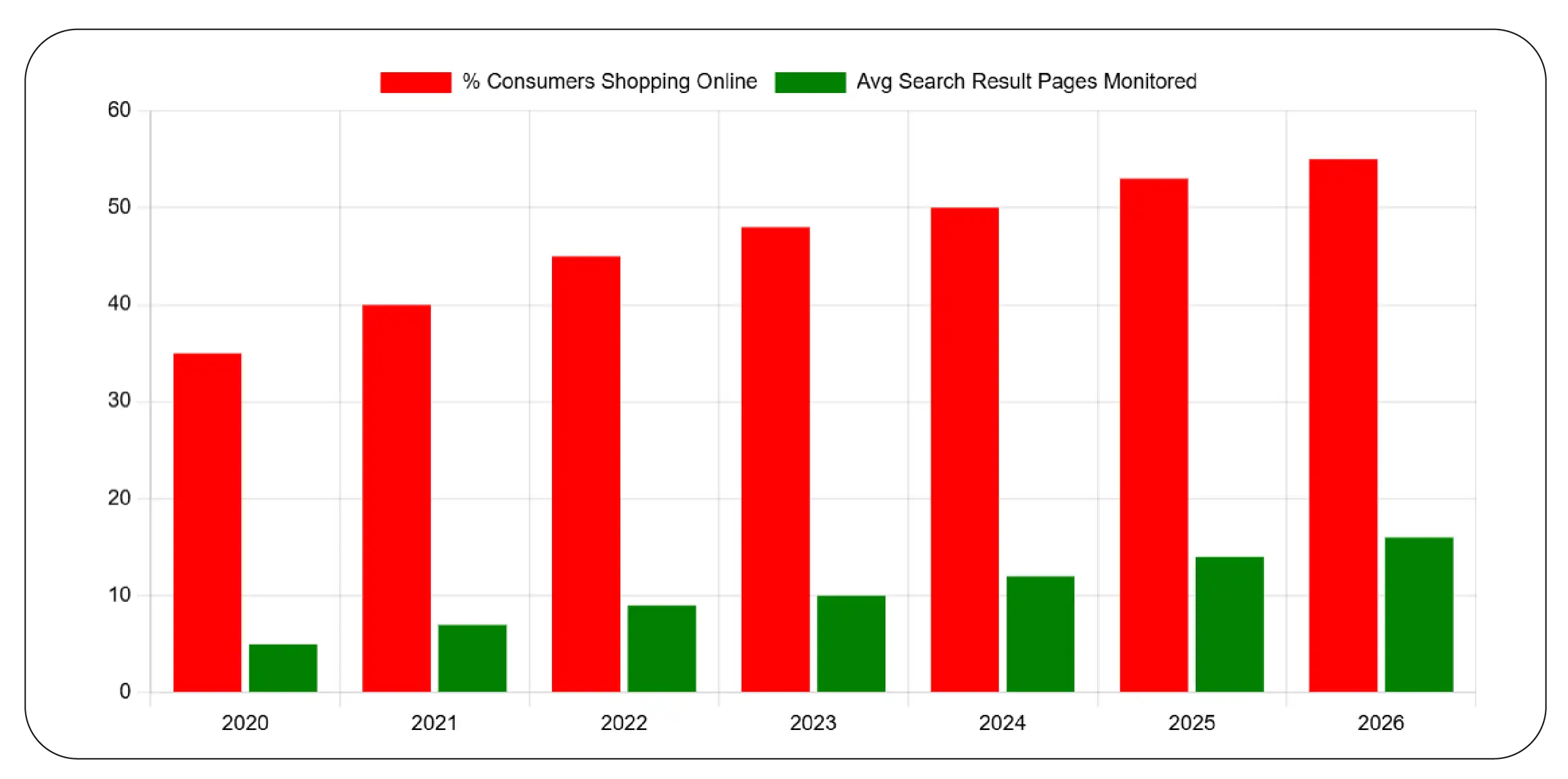
Retailers benefit from Stop & Shop Digital Shelf Price Monitoring to understand how products are displayed, priced, and ranked across digital storefronts. From 2020 to 2026, digital shelf visibility has become as important as in-store placement.
Monitoring product positioning alongside pricing provides insights into search ranking trends, sponsored product placements, and featured deals.
| Year | % Consumers Shopping Online | Avg Search Result Pages Monitored |
|---|---|---|
| 2020 | 35% | 5 |
| 2021 | 40% | 7 |
| 2022 | 45% | 9 |
| 2023 | 48% | 10 |
| 2024* | 50% | 12 |
| 2025* | 53% | 14 |
| 2026* | 55% | 16 |
By combining price data with digital placement insights, retailers optimize listing strategies and improve conversion rates. Continuous monitoring strengthens competitive positioning across search-driven grocery purchases.
Real-Time Automation for Data-Driven Decisions
Automated Stop & Shop Real-Time Grocery Price Scraper solutions powered by a robust Web Data Intelligence API provide immediate visibility into market fluctuations. Grocery prices can shift multiple times weekly, especially during promotional campaigns.
Real-time data automation ensures that dashboards reflect accurate pricing information.
| Year | Avg Weekly Price Updates | % Retailers Using Automation |
|---|---|---|
| 2020 | 2 | 28% |
| 2021 | 3 | 34% |
| 2022 | 4 | 41% |
| 2023 | 5 | 48% |
| 2024* | 6 | 55% |
| 2025* | 6 | 60% |
| 2026* | 7 | 65% |
Real-time scraping eliminates latency in decision-making. Retailers leverage automated APIs to trigger alerts when competitor prices drop below predefined thresholds, enabling immediate strategic responses and improved pricing agility.
Scalable Infrastructure for Long-Term Growth
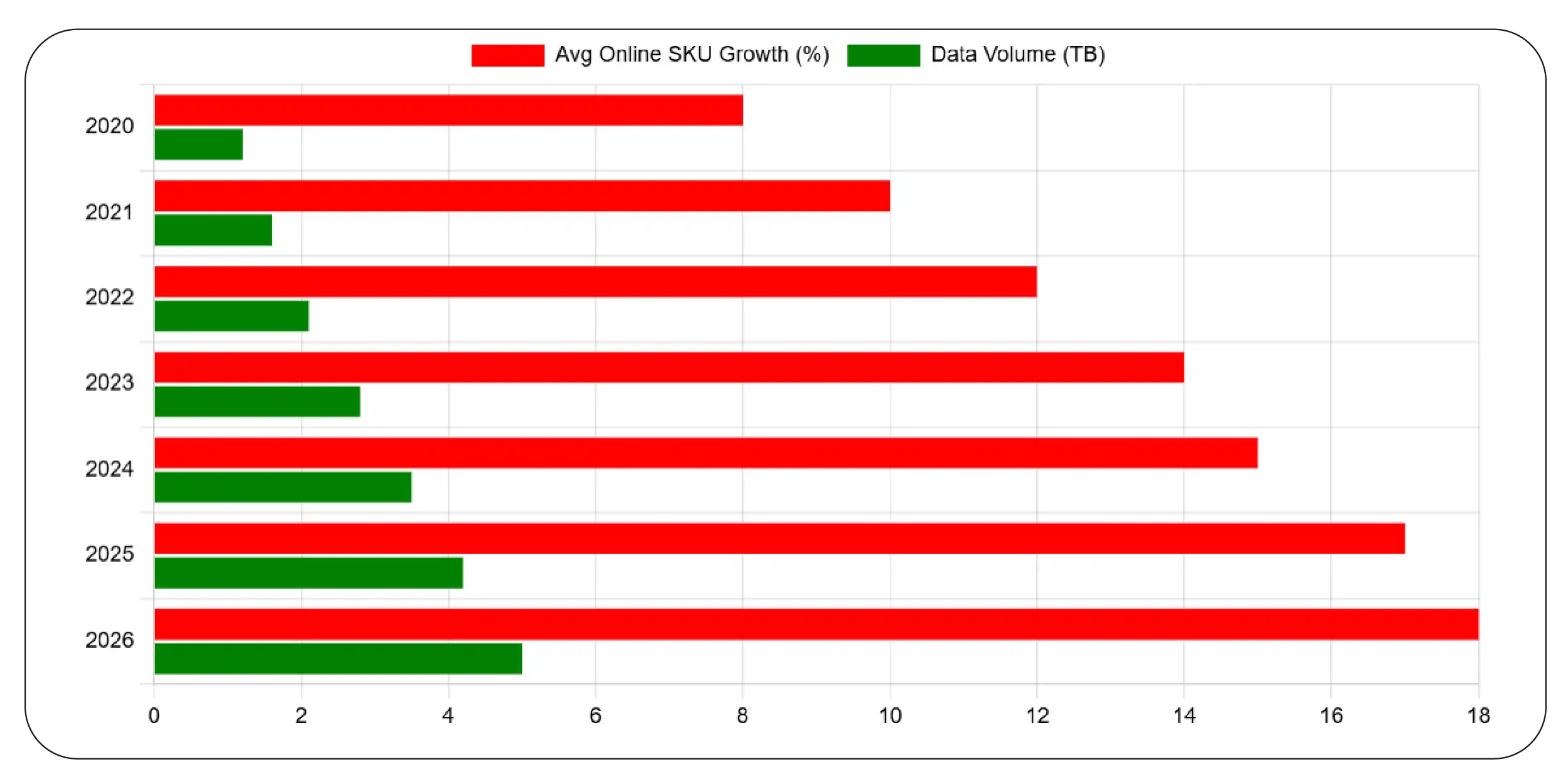
A structured Stop & Shop Grocery Data Scraping API ensures scalability, reliability, and data consistency across thousands of product listings. As digital grocery catalogs expand annually, scalable APIs prevent data gaps and maintain structured output formats.
| Year | Avg Online SKU Growth (%) | Data Volume (TB) |
|---|---|---|
| 2020 | 8% | 1.2 |
| 2021 | 10% | 1.6 |
| 2022 | 12% | 2.1 |
| 2023 | 14% | 2.8 |
| 2024* | 15% | 3.5 |
| 2025* | 17% | 4.2 |
| 2026* | 18% | 5.0 |
Scalable infrastructure supports structured extraction, automated scheduling, historical tracking, and normalized dataset delivery. Retailers benefit from long-term data continuity, ensuring predictive modeling accuracy and sustainable competitive intelligence frameworks.
Why Choose Product Data Scrape?
Businesses seeking to Extract Stop & Shop Grocery & Gourmet Food Data require structured, reliable, and scalable data pipelines. Product Data Scrape delivers automated extraction frameworks that transform complex grocery listings into analytics-ready datasets. With advanced infrastructure, compliance-focused scraping methodologies, and customizable API delivery formats, we empower retailers and analytics firms to Scrape Stop & Shop Grocery Prices for Competitive Intelligence efficiently. Our solutions provide real-time monitoring, historical price tracking, and SKU-level insights designed to strengthen retail intelligence strategies and long-term profitability.
Conclusion
Retailers operating in competitive grocery markets must prioritize structured data intelligence to maintain pricing agility and margin stability. By leveraging advanced solutions to Extract Grocery & Gourmet Food Data, businesses gain granular visibility into SKU-level pricing, promotional cycles, and digital shelf positioning. Organizations that consistently Scrape Stop & Shop Grocery Prices for Competitive Intelligence unlock predictive insights that enhance forecasting accuracy and strategic decision-making.
Ready to transform grocery price data into measurable competitive advantage? Contact us today to build your scalable retail intelligence solution.
Comments
Post a Comment