Clothing Sales Intelligence for 2025 with Market Insights

Introduction

The global fashion industry is experiencing rapid transformation as digital commerce, shifting consumer preferences, and economic volatility reshape brand performance. As competition intensifies, Clothing Sales Intelligence for 2025 has become critical for identifying growth opportunities, optimizing inventory, and forecasting trends with precision. Between 2020 and 2025, apparel sales datasets reveal clear winners — brands that embraced real-time insights, automated scraping, and marketplace analytics to understand changing customer behavior.

From premium labels to mass-market retailers, fashion companies increasingly rely on structured data to monitor competitor pricing, track product availability, and decode consumer sentiment. With markets evolving faster than ever, data-driven decision-making is the foundation for capturing 25%+ growth segments in 2025.

Evolving Dynamics of Global Fashion Sales

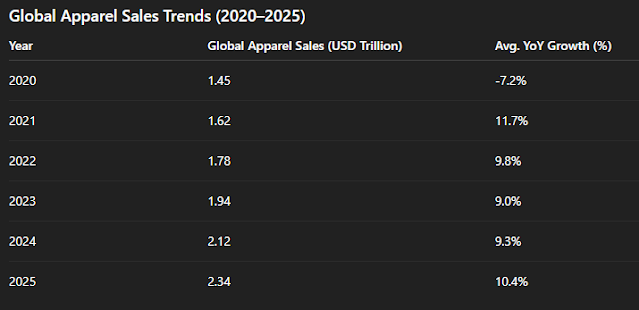
Modern retail success depends on accurate, real-time datasets. In 2025, brands rely heavily on clothing sales datasets for top fashion brands to analyze category performance, pricing shifts, and SKU-level demand. The 2020–2025 period highlights dramatic shifts driven by digital adoption and post-pandemic consumer behavior.

Digital-first fashion brands surged 25% faster than traditional brands in 2025 due to agile supply chains and rapid microtrend execution. Demand rose sharply in categories such as:

  • Athleisure & activewear
  • Gender-neutral fashion
  • Premium basics
  • Sustainable apparel

Influencer-driven demand, discount cycles, and volatile pricing emphasized the need for structured, real-time insights.

    Predicting Holiday Shopping Trends with Data Insights

Competitive Performance Insights Across Leading Fashion Labels

Using 2025 fashion brand rankings extracted via scraped sales data, businesses can identify rising brands, stagnating players, and categories gaining momentum.

Top 5 Global Fashion Brand Market Shares (2020–2025)

Tech-forward brands expanded faster due to:

✔ AI-driven personalization
✔ Dynamic pricing
✔ Rapid product drops
✔ Strong influencer marketing

Such rankings help brands benchmark performance, identify threats early, and adjust assortments strategically.

Role of Web-Driven Intelligence in Fashion Sales

The rise of web-scraped fashion sales data has redefined how brands analyze competition, track top-performing SKUs, and set prices.

Marketplace Listing Trends (2020–2025)

With more SKUs online, competition intensified, making real-time scraped data essential for:

  • Optimizing product mix
  • Timing discounts
  • Avoiding stockouts
  • Tracking fast-changing demand

Growth of Online Apparel Marketplaces

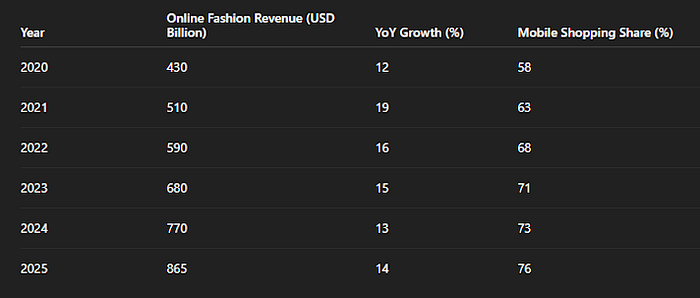
The global shift to online shopping accelerated, making E-commerce clothing sales scraping indispensable.

E-Commerce Fashion Growth (2020–2025)

Press enter or click to view image in full size

Scraped insights show rising demand for:

  • Affordable basics
  • Premium athleisure
  • Microtrend-driven influencer collections

Value of Granular SKU-Level Insights

SKU-level clothing sales datasets help brands understand item-level performance, enabling smarter replenishment and pricing.

SKU Performance Patterns (2020–2025)

SKU-level tracking helps reduce:

✔ Dead stock
✔ Excess returns
✔ Inventory costs


And improves:

✔ Forecasting accuracy
✔ Category-level insights
✔ Profit margins

Expanding Data Coverage Across Platforms

To capture global demand patterns, brands must Scrape Data From Any E-commerce Website, including:

  • Marketplaces
  • Brand-owned stores
  • Regional e-commerce sites
  • Mobile apps

Multi-Platform Data Growth (2020–2025)

Cross-platform intelligence reveals:

  • True market share
  • Hidden pricing opportunities
  • Category expansion patterns
  • Competitor growth hotspots

Why Choose Product Data Scrape?

With advanced tools to Extract Fashion & Apparel Data, Product Data Scrape delivers:

✔ High-accuracy datasets
✔ Global platform coverage
✔ Automated pricing intelligence
✔ SKU-level tracking
✔ Real-time market insights
✔ Custom eCommerce datasets

Businesses gain a robust intelligence layer to forecast trends, identify opportunities, and stay competitive in 2025’s fast-evolving retail landscape.

Conclusion

In 2025, data-driven decision-making is the backbone of fashion retail success. Brands equipped with Custom eCommerce datasets and real-time Clothing Sales Intelligence For 2025 can outperform competitors, optimize assortments, and capitalize on the 25%+ market growth shaping modern fashion.

Transform your fashion analytics with Product Data Scrape — leverage real-time, market-ready datasets to stay ahead of the competition.

FAQs

1. How does scraped fashion data improve brand strategies?

It provides insights on pricing, best-selling SKUs, promotions, and competitor activity, enabling smarter assortment planning and accurate demand forecasting.

2. What types of fashion data can be scraped?

Pricing, inventory, reviews, ratings, product attributes, SKUs, discounts, and cross-platform listings.

3. How frequently can clothing sales data be updated?

Hourly, daily, or weekly depending on business needs.

4. Can scraping track global fashion brands?

Yes. Scraping covers global marketplaces, regional platforms, and brand websites.

5. Why is SKU-level data important?

SKU intelligence reveals item-level demand, reduces stock issues, and improves replenishment accuracy.

Source >> https://www.productdatascrape.com/fashion-sales-intelligence-datasets.php

Explore Our More Servises

Comments